

In my previous article, I explored the internal rework costs of bad data—the “death by a thousand cuts” where staff spend hours fixing minor errors.
But a recent personal experience with a local catering business, Mama Ha, perfectly illustrates a more painful cost: Operational Waste caused by disconnected data systems.
1. The “Silent” System Error
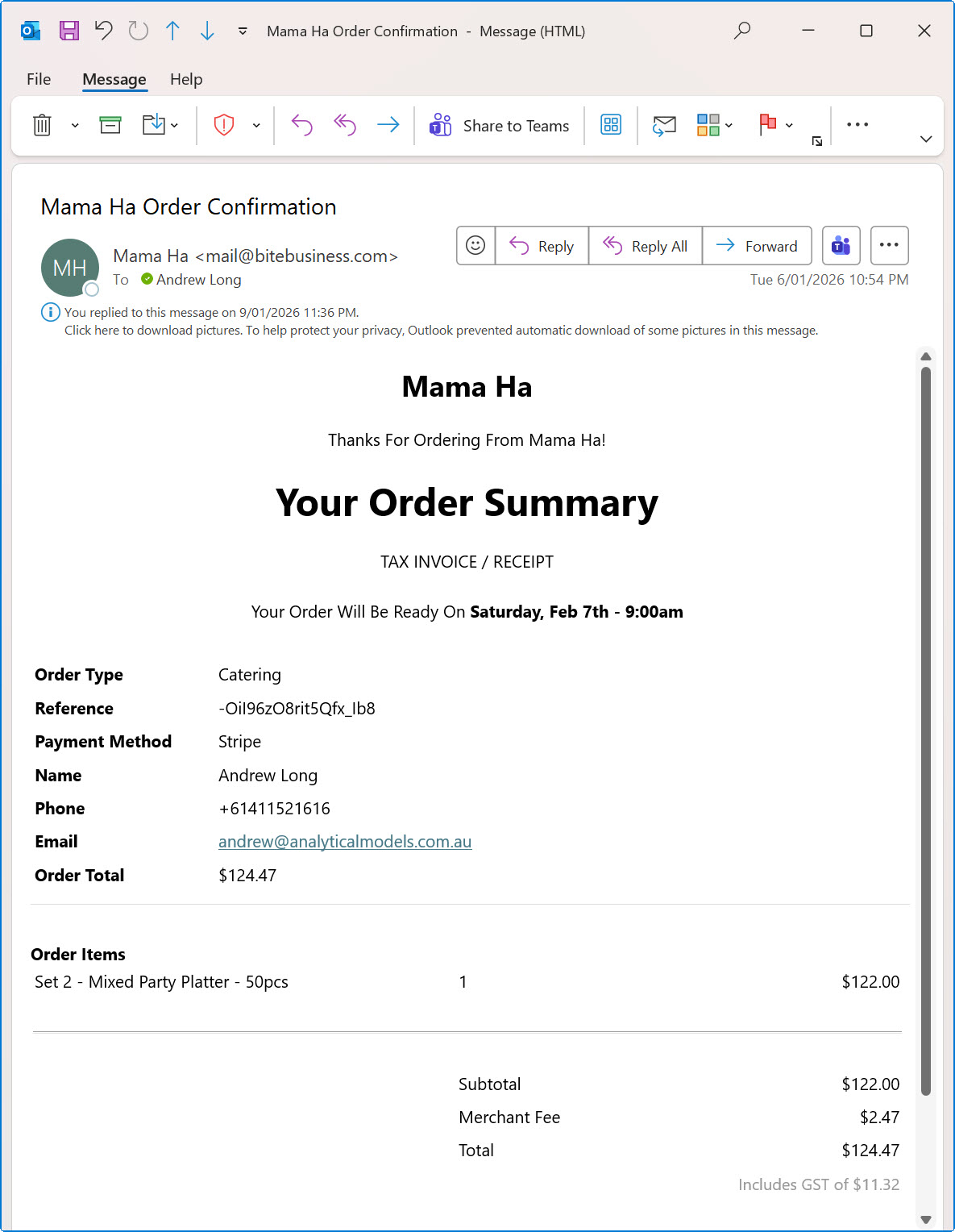
It started in early January. I ordered a $122 “Mixed Party Platter” for a family gathering on the 10th of January. The website accepted my payment (including a $2.47 merchant fee) and sent a confirmation.
However, look closely at the confirmation below. The system realized the business was closed, so it silently rescheduled my order to Saturday, Feb 7th at 9:00 am without a single warning or “Are you sure?” prompt.
2. The Human Correction (or so I thought)
When I emailed to shift my pickup time, a staff member named Jenny politely informed me they were closed until February 7th. Realizing the date wouldn’t work, I requested a cancellation and refund. Jenny confirmed they would process it.
I checked my bank account, and the money was back. I assumed the data trail ended there.
3. The “Ghost” Order in the Kitchen
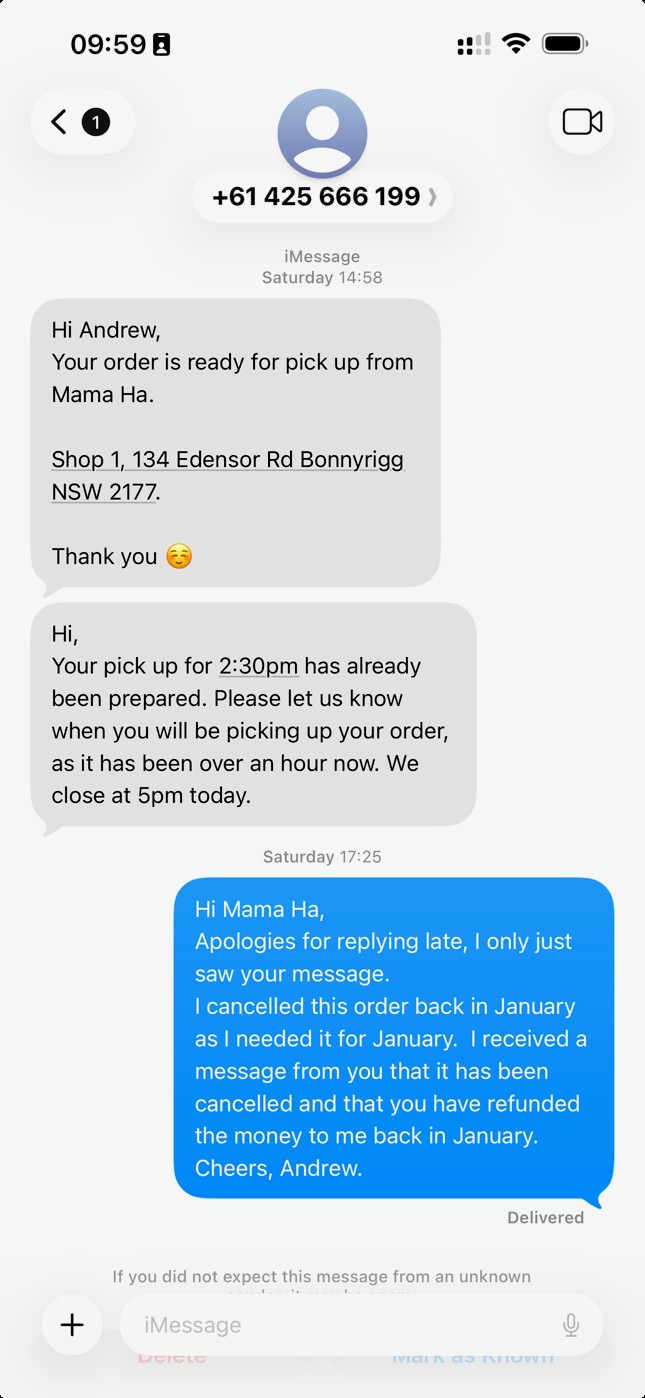
Fast forward to February 7th. While I was taking an afternoon nap, my phone began to buzz:
-
2:58 PM: “Your order is ready for pick up from Mama Ha.”
-
4:00 PM (approx): A follow-up text asking when I’d arrive, noting the food had been ready for over an hour.
The staff had spent their time, labour, and 50 pieces of fresh food on an order that—according to their accounting system—did not exist.
The “Different Angle”: The Cost of Data Silos
This wasn’t just a typo in a spreadsheet. This was a failure of Data Integration. The “Accounting/Refund” system (Stripe) and the “Kitchen/Production” system were clearly not talking to each other. When the refund was issued, the production ticket remained active. Here is the breakdown of what that “broken link” cost the business:
-
Total Inventory Loss: $122 worth of food wasted.
-
Merchant Fee Friction: The business paid to process $124.47 and likely paid again to refund it.
-
Wasted Labour: The time a chef spent preparing a 50-piece platter and the time staff spent chasing a “no-show” customer.
-
Reputational Opportunity: Instead of a smooth first transaction, the interaction ended with a message from me explaining why I wasn’t coming.
The Bottom Line for Your Business
If your payment system, website, and production line aren’t sharing a “single source of truth,” you aren’t just managing data—you’re managing a liability.
Capturing data correctly at the point of entry (validation) and ensuring it flows through the entire business (integration) isn’t just a technical goal. It is a fundamental strategy for protecting your profit margins from “ghost orders” and unnecessary waste.
Download a free copy of our Ghost Order Prevention Checklist.