
Regaining Data Sovereignty – How to Liberate Your Business from the SaaS Reporting Trap
The Promised Land of the Cloud (And the Control We Left Behind)
Cast your mind back a decade or so, to the collective sigh of relief that echoed across the business world as companies began migrating their historical data and operations to the cloud. For business owners and managers, the promise of Software-as-a-Service (SaaS) and web-based infrastructure felt like a liberation.
Virtually overnight, the relentless headaches of managing local, on-site servers vanished. There were no more unexpected hardware failures to scramble over, no more anxious nights wondering if the local backup routine had actually run, and no more capital-intensive IT maintenance cycles. Data was safely “somewhere out there,” maintained by global tech giants, and accessible from any browser. It was a triumph of operational efficiency.
But as the honeymoon period faded, a quieter, more insidious frustration began to take hold. In swapping our local server headaches for the seamless convenience of SaaS platforms, many businesses inadvertently signed away something far more valuable: true custody of their own data. We handed over the keys to our digital storehouses, only to find that when we wanted to look inside, we had to peer through the vendor’s window on their terms.
Today, data is no longer just a byproduct of daily transactions; it is the single most valuable strategic asset a modern business possesses. Yet, millions of companies find themselves in a state of data captivity—unable to easily access, manipulate, or extract the very information they generated. Fortunately, the landscape is shifting once again. With the rise of artificial intelligence and modern cloud architecture, businesses are discovering that they don’t have to accept this compromise any longer. It is finally time to talk about regaining your data sovereignty.
The SaaS Reporting Trap: Data Captivity
It starts with a simple, everyday business need. You want to track a specific operational trend, compare quarterly performance across divergent customer segments, or run a tailored analysis that doesn’t fit into a standard box. You log into your SaaS platform, navigate to the reporting dashboard, and immediately hit a digital brick wall.
This is the illusion of data access. Because you can see your data neatly visualised in colourful charts on a web page, it feels like it is fully at your disposal. But viewing data on a screen is a far cry from owning the path to it.
Instead, most businesses quickly find themselves restricted to pre-packaged report templates. These templates are designed by the SaaS provider to satisfy the lowest common denominator, built for thousands of generic users, not for the unique, nuanced logic of your business. If you want to modify a layout, add a custom calculation, or cross-reference two disparate data sets within the same platform, you are frequently out of luck. Even basic data retrieval can become a tedious exercise in frustration, requiring staff to click through page after page of fragmented links just to view a complete historical record.
Faced with these rigid limitations, the natural workaround for any manager or analyst is to hit the “Export to CSV” or “Download to Excel” button. But this is where the real bottleneck occurs. Instead of receiving a clean, flat table ready for analysis, SaaS exports are frequently delivered in formats that seem actively hostile to analytical software. You open the file only to find nested headers, randomly merged cells, blank rows used for visual spacing, and mixed data types in a single column.
“In the most restrictive cases, some SaaS platforms go as far as blocking raw data downloads entirely, allowing users only to export information as a flat, static PDF. The data is practically trapped in a digital straitjacket.”
Before this information can be ingested into an analytical tool like Microsoft Excel or Power BI, it must undergo a gruelling transformation process. Staff must manually delete rows, unmerge cells, reformat dates, and write complex lookups just to clean the data. This is the hidden “transformation tax” of the SaaS era. It represents a massive, ongoing operational drain, hundreds of collective hours spent by highly paid staff acting as manual data wranglers, doing repetitive administrative lifting just to make their own company data readable.
By keeping data siloed and difficult to extract, SaaS providers subtly ensure that you remain dependent on their ecosystem. You generated the data, and you pay a premium to store it, but when it comes to deep strategic analysis, you are effectively operating in a state of data captivity.
Enter AI: Breaking the Data Silos
Just as the data captivity crisis seems to have reached a boiling point, technology has thrown businesses a lifeline. The rise of Artificial Intelligence (AI) and advanced automation tools is fundamentally changing the rules of data engineering. For years, breaking out of a SaaS platform’s rigid reporting environment required highly complex, custom code that was expensive to build and brittle to maintain. If the vendor changed a single button or field, the whole pipeline broke.
To overcome severe platform limitations in the past, such as the dreaded PDF-only export, it required substantial precision engineering. A business had to build custom workarounds, often pairing sophisticated Python scripts to scrape and extract the textual data with Microsoft Excel macros to map and validate the output. While highly effective, this path required significant development time and exhaustive validation testing to guarantee that the process wasn’t transforming fields incorrectly or dropping critical historical records.
AI changes everything because it can understand context, structure, and intent rather than just relying on rigid coding logic. Today, AI-powered document processing models can scan a flat PDF, instantly recognise the underlying tabular structure, and extract the text and figures with near-perfect accuracy. It can look at a chaotic spreadsheet riddled with blank rows, merged cells, and chaotic subtotals, instantly deduce what the data is supposed to look like, and flatten it into a clean, structured table.
Beyond handling messy manual exports, AI is drastically streamlining the creation of automated data pipelines. Modern AI tools can effortlessly map data fields between completely different systems. For example, if your CRM calls a field “Client_Name” and your accounting software calls it “Customer_ID”, AI can instantly identify that they refer to the same entity and build the translation bridge automatically.
What used to take an entire IT team weeks of writing extraction scripts can now be achieved in a fraction of the time using intelligent data pipelines. The profound implication here is that businesses no longer have to politely ask their SaaS vendors for better reporting features, or wait years for a feature request that may never come. By utilising AI to automate the heavy lifting of data transformation, you can bypass the vendor’s restrictive front-end entirely. AI acts as the ultimate interpreter, taking whatever uncooperative format the SaaS platform throws at you and instantly reshaping it into a clean, powerful fuel ready for your analytical software.
The Modern Destination: Cloud Data Warehousing
Once a business commits to liberating its data from the confines of a restrictive SaaS platform, the immediate question becomes: where does it go?
For many business leaders, this triggers a wave of anxiety. Leaving the structured reporting environment of a SaaS provider can feel like taking a massive step backward to the complex IT architectures of the early 2000s. There is a common misconception that reclaiming data sovereignty means you have to go back to creating, maintaining, and manually patching raw local database servers, taking on all the infrastructure headaches you thought you had escaped.
Fortunately, the data landscape has evolved into a powerful middle ground. You do not need to take on an IT maintenance burden to own your data. Instead, the modern destination for liberated business data is a fully managed, cloud-based data warehouse or data lake, utilising platforms like Google BigQuery, Snowflake, or Amazon Redshift.
SaaS Convenience with Total Data Sovereignty
These platforms offer the best of both worlds. Because they operate on a modern cloud infrastructure, the platform provider still handles all the hardware optimisation, security patching, and server scaling automatically, just like a SaaS system does. Furthermore, the absolute beauty of modern cloud architecture is that the entire concept of server capacity becomes completely invisible to your business. You never have to worry about the logistical headache of your database spilling over from one physical server to a second or third; the cloud infrastructure scales horizontally and seamlessly in the background to accommodate whatever volume of data you throw at it.
However, the critical difference lies in ownership and access:
- Unrestricted Querying: Unlike a SaaS reporting module, you own the underlying data repository completely. There are zero artificial barriers. You can run complex, multi-layered queries across your entire historical data set whenever you want.
- Direct Integration: You can seamlessly connect this cloud warehouse directly to the analytical tools your business relies on, whether that means pulling live, structured data straight into Microsoft Excel, loading it into interactive Power BI dashboards, or feeding it into customised Python automation models.
- No Format Lock-In: Your data is stored in its pure, structured form, meaning you are never again at the mercy of a vendor’s rigid template design or stuck trying to decipher a flat, uncooperative export.
By landing your data in your own cloud warehouse, you effectively separate your operational tools from your analytical intelligence. You still use your SaaS platforms to run the day-to-day mechanisms of your business, but you continuously stream a copy of that raw information into a centralised repository that belongs entirely to you. It is the architectural foundation of true data independence.
The Reality Check: Managing Costs and the Workflow Gap
Acknowledging the theoretical brilliance of a modern data warehouse is one thing, but as a business owner or manager, you have to balance the ledger. Introducing a centralised cloud database alongside your existing software inevitably raises a pragmatic question: If we keep our SaaS platforms but add a cloud data warehouse, aren’t we just paying twice for our data?
It is a valid concern. You are paying the SaaS provider for the capability to run your business, and you are now also paying to extract, ingest, and store that same data in a cloud repository. Furthermore, because SaaS systems evolve based on the provider’s priorities, which frequently diverge from your specific business requirements, you risk creating a fragmented workflow gap for your staff.
The “Split-Screen” Dilemma
Consider a practical example. Suppose you extract your historical customer data into your cloud warehouse and use your own advanced analytics to calculate a proprietary Customer Risk Score, a highly valuable metric customised to your unique market logic. Because this insight was realised outside your SaaS CRM, your customer service team faces a disjointed experience. To serve a client, they have to look at the SaaS screen for standard history, and then toggle to a separate, custom-built interface just to view that critical risk score.
Suddenly, your most valuable customer insights are sitting entirely outside the core system your staff use every day. Building a completely standalone application to bridge this gap is often cost-prohibitive and operationally clunky.
The Cost-Effective Solution: Bi-Directional Syncing
Fortunately, you don’t need to build expensive new software interfaces. The modern, cost-effective way to manage this gap is through a strategy known as Reverse ETL (Extract, Transform, Load), or simply, automated bi-directional syncing.
Instead of forcing staff to leave their familiar software environment, you use lightweight, automated pipelines to do the heavy lifting. The raw data is pulled out cheaply, the complex logic or proprietary risk scores are calculated in your cloud warehouse, and then just the final insight is automatically pushed back into a customised field right inside the SaaS screen. Your front-line staff never have to leave the CRM; the valuable data you generated independently appears exactly where they already look.
The Automated Bi-Directional Data Loop
- SaaS CRM Platform: Front-End Operational Workspace used daily by staff. Displays core details and the final Custom Risk Score.
- ↓ (1. Stream Raw Data): Continuous background extraction feeds raw data directly into cloud storage.
- Sovereign Cloud Data Warehouse: Background cloud infrastructure automatically computes proprietary metrics (e.g. Risk Scores – 2. Run Custom Analytics) cheaply.
- ↑ (3. Sync Final Insight): Reverse ETL automatically syncs calculated insights directly back into dedicated SaaS field.
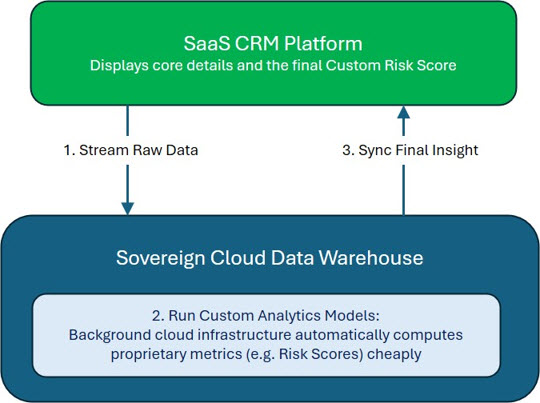
Figure 1: The Automated Bi-directional Loop
The True ROI of Sovereignty
When you look closely at the numbers, this architecture is remarkably cost-effective. Storing raw data in modern cloud warehouses like BigQuery or Snowflake is incredibly inexpensive, often costing just a few dollars per gigabyte per month. The seamless elasticity of the cloud means you only pay for the exact computing power you use, with zero upfront capital expenditure.
When evaluating the cost, businesses must weigh a minor cloud infrastructure fee against two massive operational drains:
- The Manual Transformation Tax: The cost of paying staff to spend hours manually copying data, unmerging cells, and wrangling uncooperative spreadsheets or PDFs every single week.
- The Cost of Vendor Lock-In: The catastrophic strategic risk of making blind or delayed business decisions because your own data is held hostage behind a third party’s restrictive wall.
By investing in a lightweight, automated bridge, you eliminate the workflow gap, keep data storage costs minimal, and maximise the return on your SaaS investment.
The Long Game: Data as a Sovereign Asset
When evaluating software and data structures, it is easy to get caught up in immediate operational fixes. But for business owners and executives, the true focus must always remain on the long game.
Over the past decade, a profound shift has occurred in how corporate value is calculated. Data is no longer merely a digital footprint left behind by daily transactions, nor is it an administrative byproduct to be archived away. It has evolved into a high-value, core balance-sheet asset. The historical patterns, customer behaviours, and operational metrics your company generates are entirely unique to you, and they represent your primary competitive advantage.
The Danger of the Tethered Business
If your data is trapped inside a third-party SaaS platform that dictates how you can view it, limits how much of it you can extract, or forces you to navigate restrictive templates, you do not truly own that asset. You are merely renting access to it. This lack of sovereignty introduces severe strategic risks:
- Capped Strategic Agility: Your ability to innovate, analyse, and pivot is entirely capped by the vendor’s current development roadmap. If their product priorities diverge from your market requirements, your business stalls.
- The Vulnerability of Price Hikes: When a third party holds all your historical records hostage, you lose all leverage. If they decide to drastically increase subscription fees, alter their terms of service, or sunset a reporting feature you rely on, you are forced to comply because the cost of data extraction is too painful to contemplate.
- Security and Visibility Gaps: True asset control means strict data governance. You must have absolute certainty over who sees your data, how it is secured, and where it is exposed. Centralising your data in your own cloud warehouse ensures you control the security protocols, rather than blindly trusting an external provider’s ecosystem.
Protecting Your Independence
Achieving data sovereignty means establishing absolute independence from your software vendors. By decoupling your daily operational software (the SaaS front-end) from your historical storage (the cloud warehouse), you retain ultimate business flexibility.
If a day comes where a SaaS tool no longer serves your firm effectively, having your historical data independently stored in your own warehouse makes migrating to a competitor vastly simpler and cheaper. You simply unplug the old system, hook up the new one, and feed it from your existing, permanent data lake. When your data is structured, secure, and entirely under your control, your strategic choices are limited only by your imagination, not by a third party’s restrictive platform constraints.
Conclusion: Reclaiming Your Independence
The migration to cloud-based SaaS platforms delivered on its promise to rid businesses of local hardware headaches, backup anxieties, and heavy on-site IT infrastructure costs. It was a necessary step forward in operational efficiency. However, the unintended consequence, the loss of true data custody and the imposition of a manual “transformation tax”, has created a quiet crisis for modern, data-driven companies. Giving up infrastructure maintenance should never mean giving up your data sovereignty.
With the accessibility of modern cloud data warehousing and the automation power of AI, you no longer have to accept the compromise of rigid templates, restricted access, or locked-down exports. By separating your daily operational tools from your analytical intelligence, you can maintain a single, cost-effective “source of truth” that belongs entirely to your business.
Your historical data, customer insights, and operational metrics are too valuable to be left in captivity. Reclaiming full control over this asset doesn’t just eliminate administrative bottlenecks and save your staff hours of tedious spreadsheet cleaning—it secures your long-term strategic agility and ensures your company is never beholden to a third party.
Ready to unlock your trapped data? If your team is buried under a mountain of manual data extraction, uncooperative reports, or fragmented workflows, you don’t have to tackle the transition alone. We specialise in helping businesses design clean, automated data pipelines and robust cloud models that return full asset control to your hands. Get in touch with us today to discuss how we can streamline your data architecture and protect your sovereignty.
Turn your data into decisions that pay for themselves
Nearly 30 years helping businesses build clean, reliable models and reporting. Let's talk about your project.
Talk to us →